
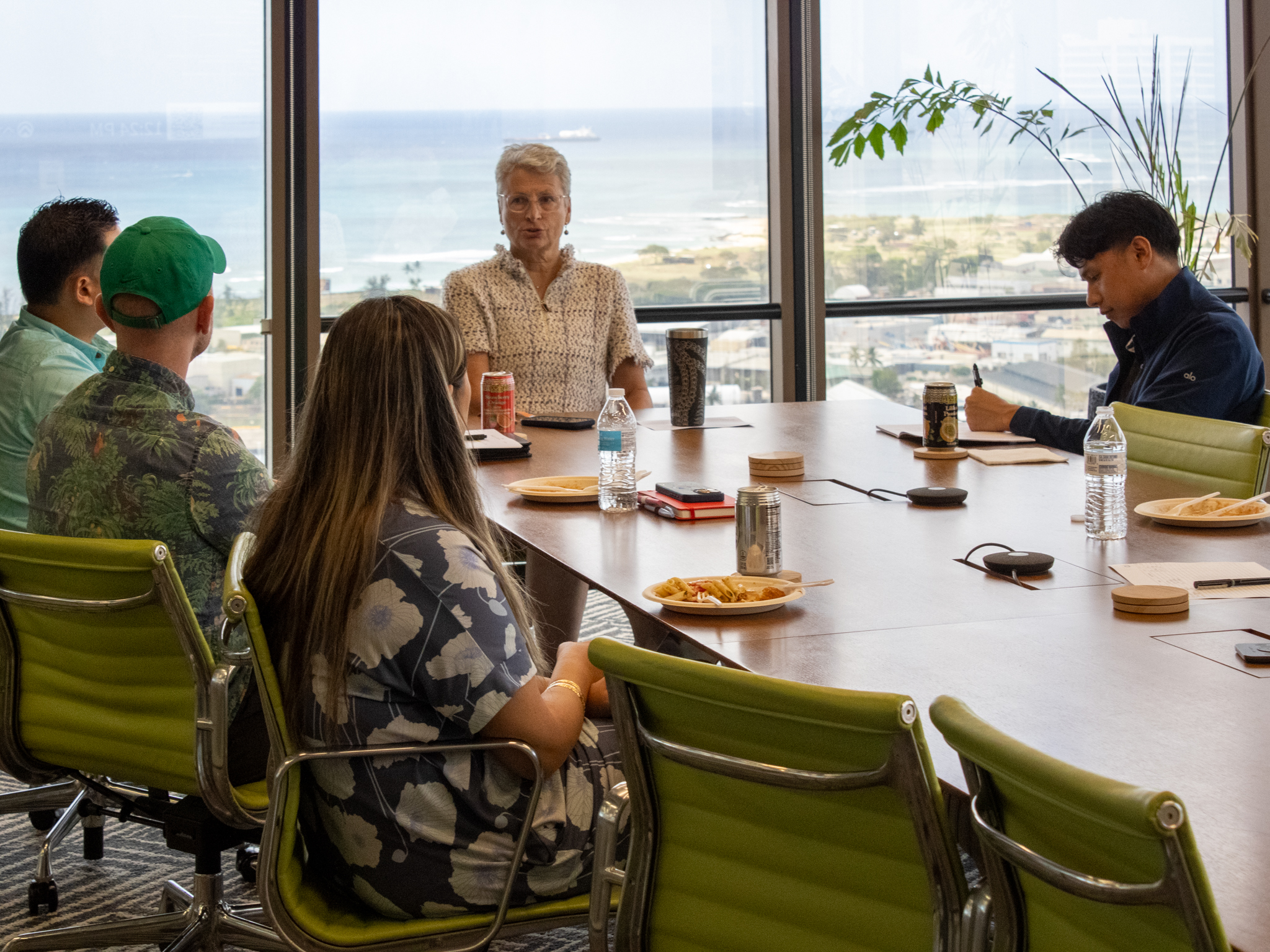
What does it mean to build a meaningful career in architecture? For AHL President and CEO Bettina Mehnert, FAIA, LEED AP, the answer has less to do with following a predetermined path and more to do with staying curious, embracing change, and recognizing opportunities along the way.
As part of AIA Honolulu's Emerging Professional Mentorship Program, Lineage, AHL welcomed emerging professionals for an intimate conversation with Mehnert centered on the series theme, "Things I Wish I Knew Earlier in My Career."
Reflecting on her unconventional career journey, Mehnert shared personal stories and lessons learned through decades of experience at AHL. From taking an extended trip through South America to gain perspective on her life to navigating the complexities of leadership within a firm she had grown alongside, her experiences illustrated how personal and professional growth often go hand in hand. She emphasized the importance of making room for personal fulfillment alongside professional aspirations.
"Don't give up on these things. Whatever it is that keeps that fire going in you, it needs to have a place. If you don't hold yourself back, life is so much fuller, and you take that back to work."
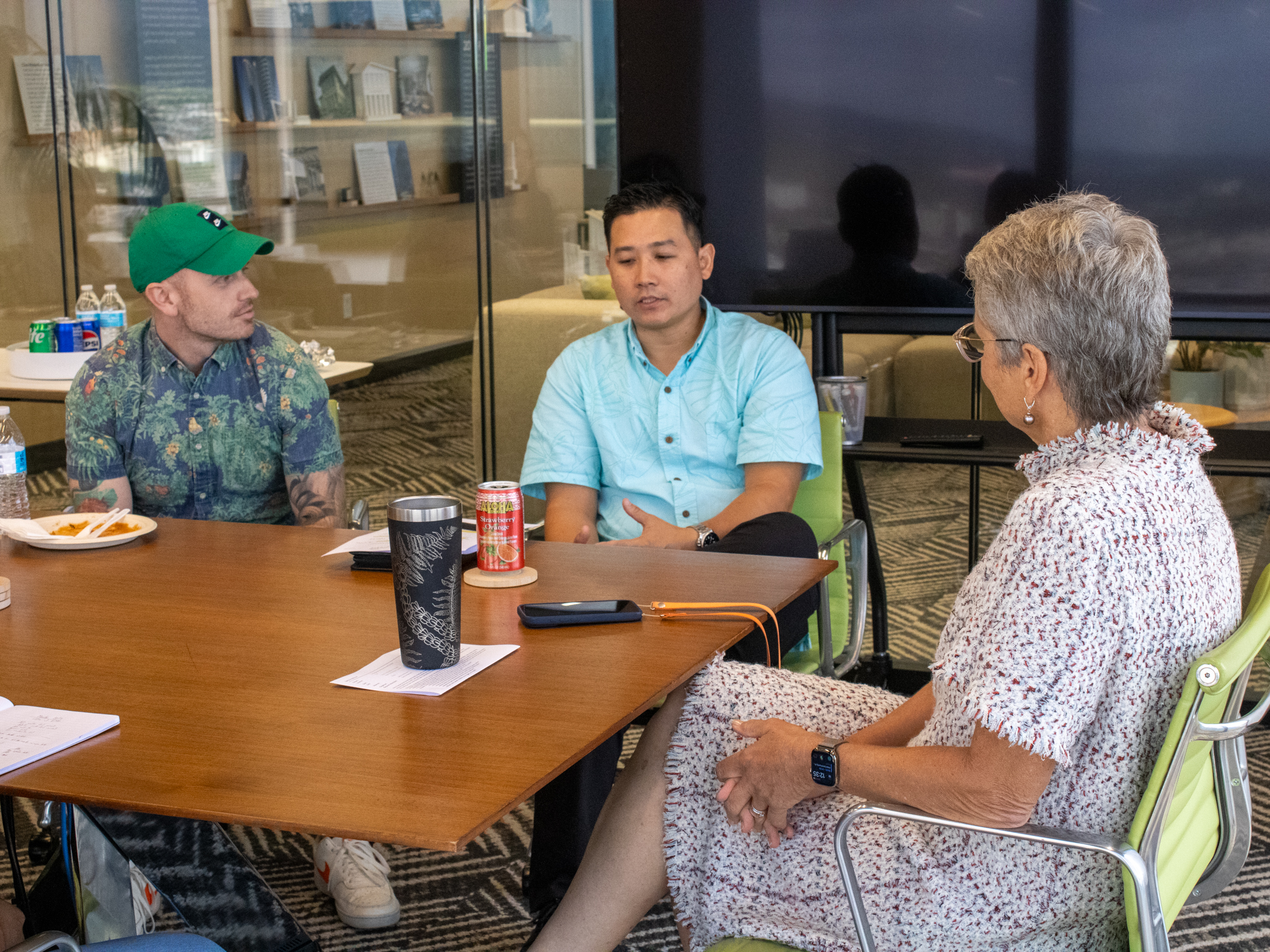
A recurring theme throughout the discussion was the importance of embracing change and reframing how we view mistakes and failure. Rather than seeing unexpected outcomes as setbacks, Mehnert encouraged participants to recognize them as opportunities to learn and grow, challenging them to reconsider how they define success and failure.
"A failure or a mistake is simply something you did with unanticipated consequences. Something happened that you didn't expect. Was it negative? No, because at the very minimum, you learned something. That's how I look at it."
The conversation also touched on the challenges of transitioning into leadership, particularly when managing colleagues who were once peers. Mehnert spoke candidly about navigating changing relationships, establishing boundaries and balancing personal connections with professional responsibilities. Her experiences reinforced the importance of trust, communication and treating others with fairness and respect.
Beyond individual career development, Mehnert shared how personal values can help shape an organization's direction. At one point in her career, her growing concerns about climate change led her to question whether she wanted to remain in architecture. Rather than leaving the profession, she found an opportunity to advance sustainability within AHL, encouraging the firm's leadership to pursue LEED accreditation and strengthen its commitment to environmental stewardship. Her initiative led AHL's senior leadership to become LEED accredited, establishing a shared commitment to more sustainable design practices.
She also reflected on the origins of AHL's 1% Program, established in connection with the firm's 60th anniversary. What began as an initiative to provide architectural services to nonprofit organizations has grown into a collective effort supported by AHL staff and consultants. Projects such as Child & Family Service Hilo Community Resource & Counseling Center demonstrate how these partnerships help nonprofits better serve their communities
"As long as people ask, ‘How can we do it?’ As long as the door isn't shut, you can work through anything. It's about finding ways to make things happen, even when the challenges seem bigger than what you can take on."
Looking ahead, Mehnert expressed optimism about emerging technologies, sustainability and the evolving architectural profession. She encouraged participants to consider what they can control and embrace opportunities for change.
"Nothing is helped by us being afraid. What can we control and what can we embrace to make our work interesting? I don't see problems. I see opportunities to make it different. That's what makes the future so exciting."
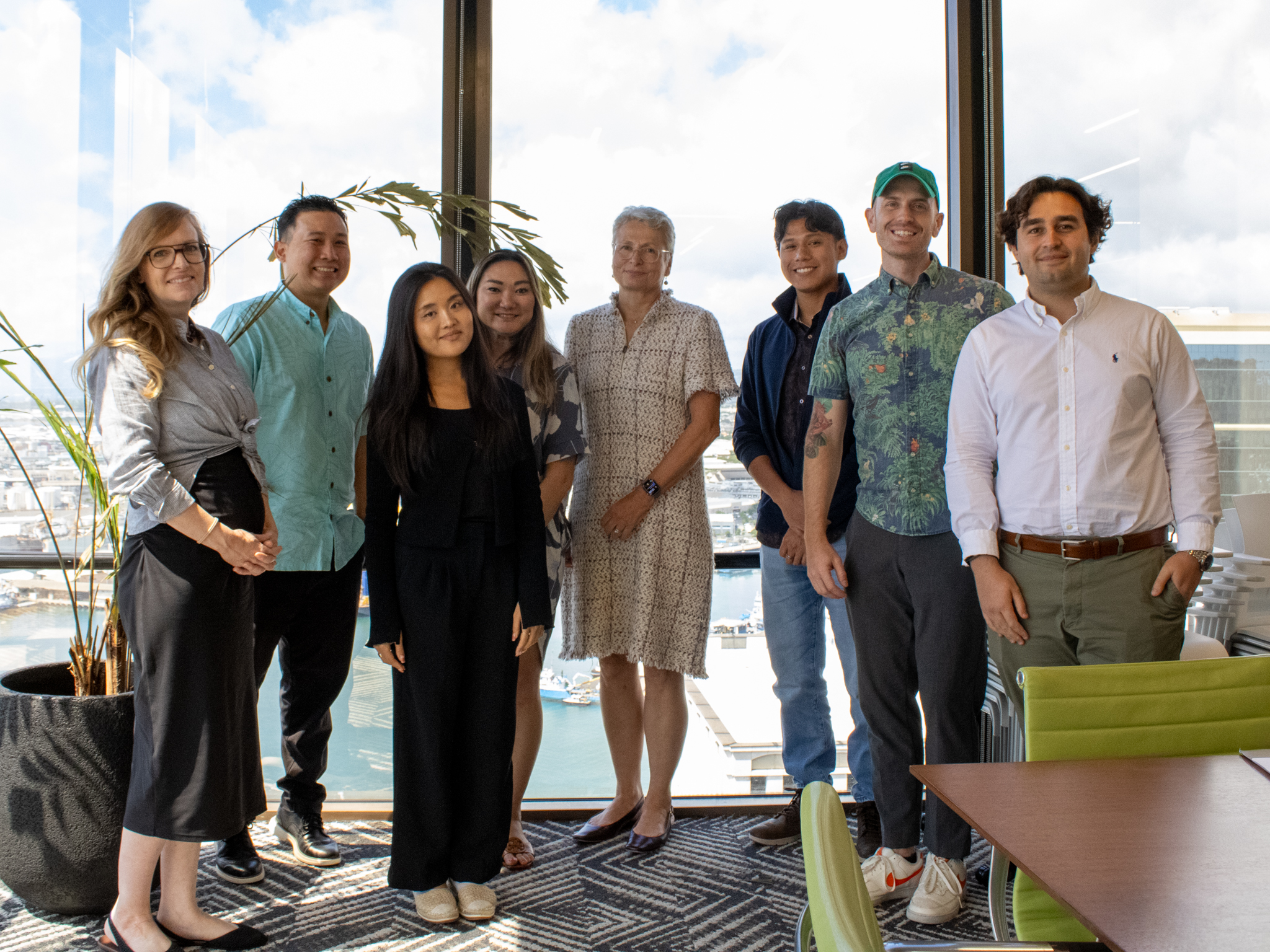
Mahalo to AIA Honolulu for creating space for these meaningful conversations, connecting emerging professionals with experienced leaders and sharing the lessons, experiences and perspectives that continue to shape Hawaiʻi's architecture community.


