
At AHL, design is never just about buildings—it’s about people. That belief came to life during a recent student design charrette with Hanalani Schools located in Mililani, O‘ahu, where students stepped into the role of designers to help shape the future of their campus.

As AHL advances the programming and conceptual design phase for a series of campus improvements—including the renovation and expansion of the Nishikawa Building Innovation Lab, new STEAM classrooms, and a future Innovation & Arts Center—the team is actively defining program needs, spatial adjacencies, and opportunities for flexible, multi-use environments. The charrette created space to test early ideas and bring student voices into that process.
Led by Director of Design Lester Ng, alongside Senior Associate and Project Architect Kevin Raley, Designer Monica Roh, and Senior Designer Jing Zheng, the session introduced students to the fundamentals of design thinking. Through collaborative exercises, sketching, and pin-up presentations, students explored how space, layout, and environment influence the way they learn, create, and connect.

Joining the workshop were students from the University of Hawai‘i at Mānoa School of Architecture, participating as part of AHL’s ongoing externship and mentorship efforts. Working alongside Hanalani students, they observed and contributed to the design process in real time—gaining valuable, project-based experience in how AHL engages clients as active collaborators. Their involvement reflects a broader firmwide initiative to deepen client participation and shape design outcomes through shared dialogue, while also investing in the next generation of designers through hands-on learning opportunities.
Pinned-up sketches quickly filled the room as students presented ideas ranging from flexible makerspaces to outdoor gathering areas anchored by the campus lawn.
What emerged was more than a collection of ideas—it was a clear reflection of Hanalani’s culture. Students expressed a strong desire for spaces that support both collaboration and focused, independent work, along with environments that can adapt throughout the day. They spoke to the importance of connection across disciplines, and the value of both indoor and outdoor spaces in shaping their daily experience.
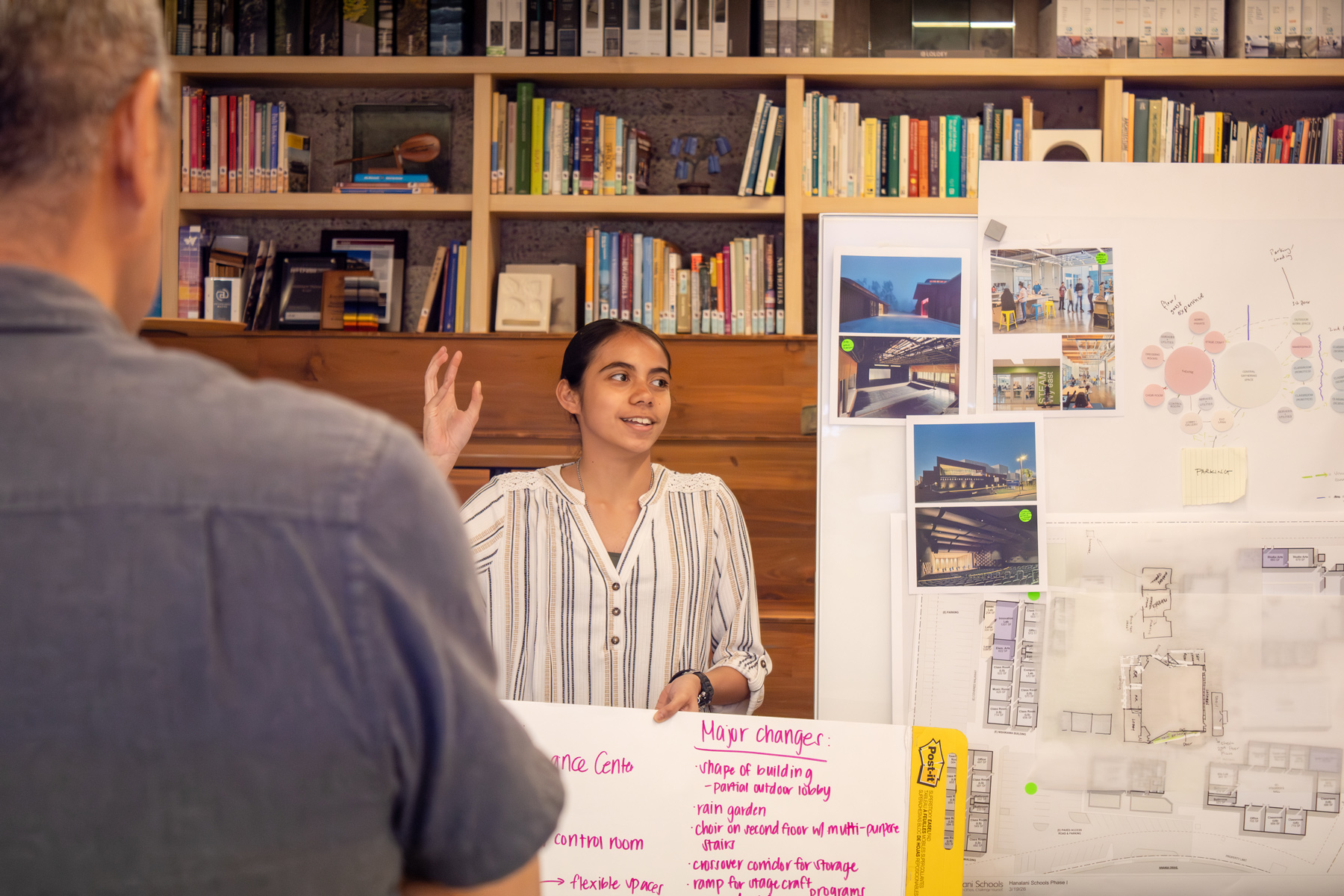
“The students were incredibly thoughtful about how they learn best,” shared Monica Roh. “They spoke about wanting spaces that feel comfortable, flexible, and reflective of who they are. It reinforced how important it is for us to design environments that truly support a sense of belonging.”
Their feedback also revealed opportunities that are now informing the project’s early planning strategies. Informal “in-between” spaces—areas for gathering, reflection, and unstructured interaction—emerged as a priority, alongside the importance of preserving open areas like the central lawn to enhance spatial quality within a compact campus. These insights are being translated into design moves, helping to shape spatial relationships, circulation, and how different program elements connect and overlap.
For the design team, the charrette reinforced the value of integrating user-driven input early in the process—before ideas are fully defined and while they can still be meaningfully tested against site, code, and building system constraints.
“Engaging students at this stage grounds the project in real experience,” said Kevin Raley. “It challenges our assumptions and helps us create spaces that are not only functional, but genuinely supportive of how students live and learn every day.”
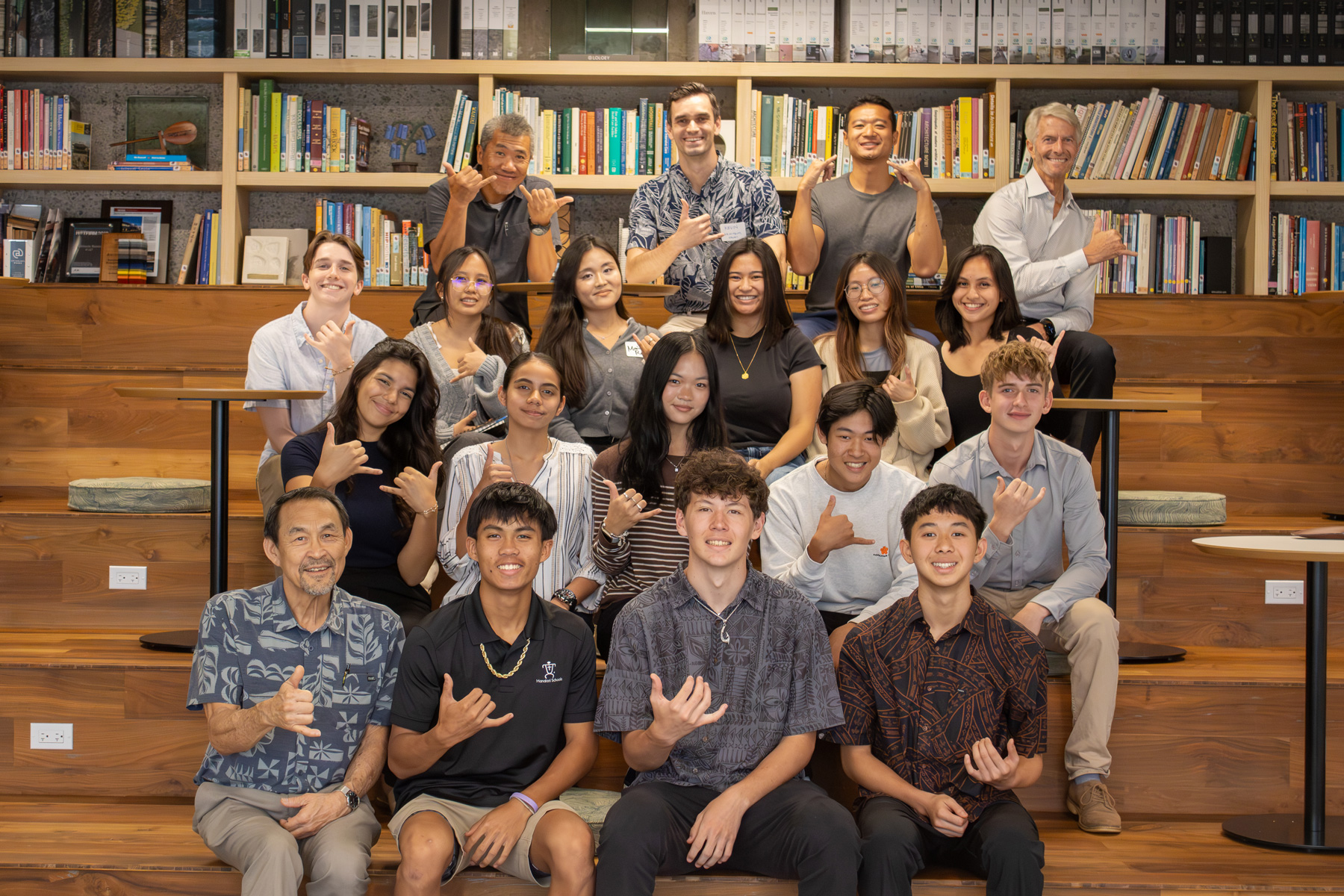
For students, the experience offered something equally impactful: a chance to see their ideas take shape within a real project. As they translated concepts into drawings and shared their thinking, many gained confidence in their ability to communicate ideas, think critically, and contribute to the built environment.
The charrette ultimately fostered a shared sense of ownership—bridging professional expertise with student insight to support a more inclusive, responsive design process. As the Hanalani project moves from conceptual design into technical development, these early insights will continue to shape how spaces are planned, connected, and ultimately built.


