

The 2018 eruption not only reshaped Hawaiʻi Island, but it also disrupted a crucial piece of scientific infrastructure. Severe ground deformation left the former Hawaiian Volcano Observatory (HVO) inoperable, creating an urgent need for the U.S. Geological Survey (USGS) to reestablish a permanent presence near one of the world’s most active volcanoes, Kīlauea.

The new USGS HVO Field Station restores that vital connection. Located within Hawaiʻi Volcanoes National Park, the facility supports continuous, real-time monitoring of Kīlauea and Mauna Loa, while providing advanced laboratories, emergency operations space and public outreach areas that help keep communities and officials informed and prepared.
For AHL, the project required a careful balance between science, safety and stewardship. Hawaiʻi Volcanoes National Park is both an International Biosphere Reserve and a United Nations Educational, Scientific and Cultural Organization (UNESCO) World Heritage Site. Visitors come to the park to experience its unique geology and to connect with its culture and history, making it essential that the field station design adhere to its surroundings while still supporting complex research and emergency response.
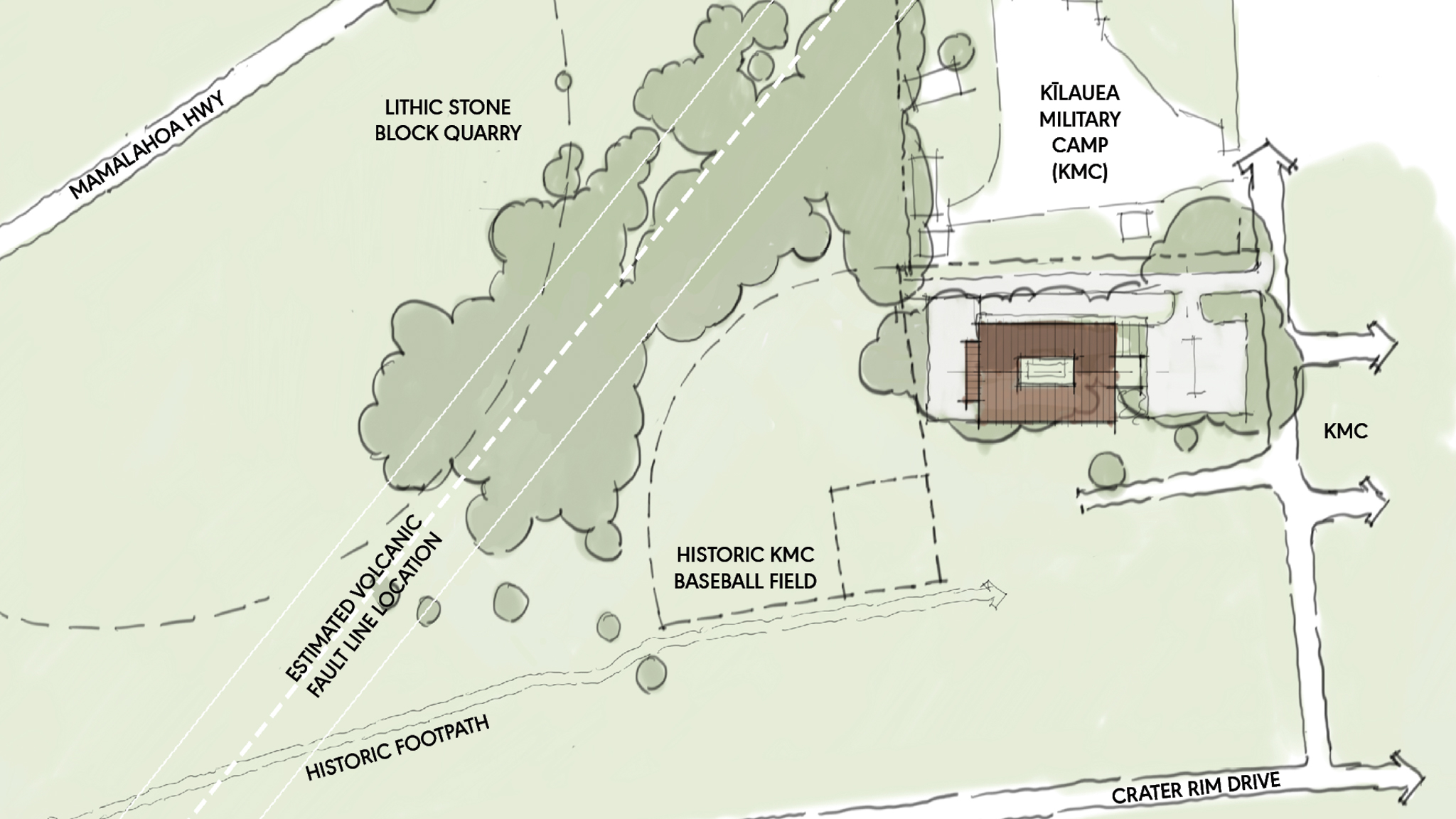
The completed facility serves as a resilient, forward-operating base for USGS. It allows scientists to monitor, investigate and assess hazards from active volcanoes and earthquakes throughout the islands, while sharing important information with the public, emergency managers, and the scientific community. During volcanic events, an Emergency Operations Center, backup power and dedicated spaces allow staff to remain safely on-site during extended operations.
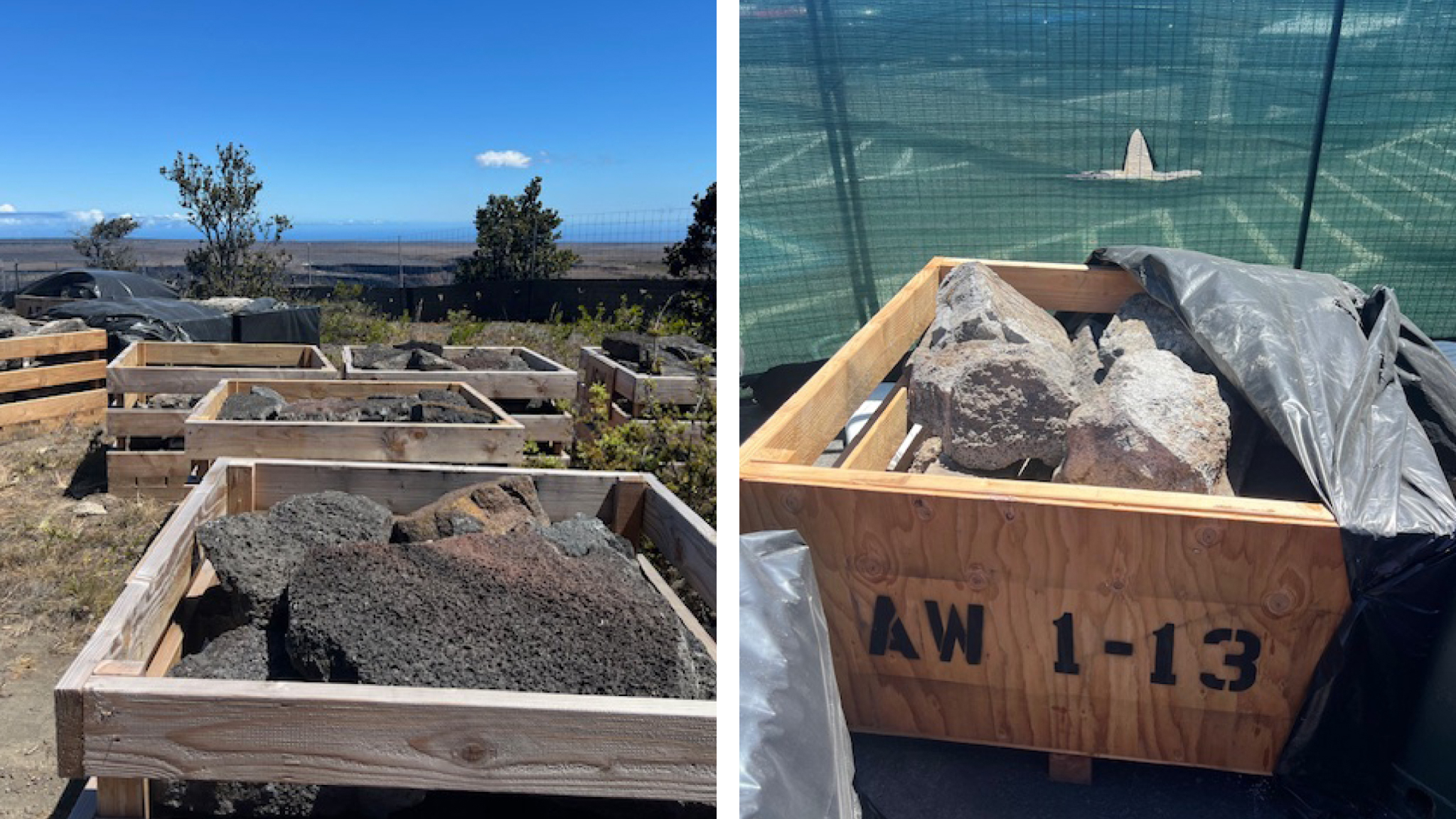
According to AHL’s Senior Associate Ina Wong, AIA, NCARB, LEED AP, and Project Manager for the USGS HVO Field Station, the design was shaped by the need to blend modern research requirements with the natural and historic character of the park. The team studied existing park buildings, including pitched corrugated metal roofs, board and batten siding and lava rock details, while following National Park Service guidelines to ensure the facility felt authentic to its setting. Salvaged lava rock from the previous observatory was reused to physically and symbolically connect the new building to its predecessor, while reclaimed ʻōhiʻa posts, koa ceiling and paneling, and native landscaping and natural boulders further ground the building in place.
“The USGS HVO Field Station is a resilient, forward-operating research base that provides real-time volcanic monitoring on Kīlauea while balancing high-performance laboratory spaces and public outreach through sustainable, context-sensitive architecture that respects the site's cultural and environmental landscape,” said Wong.
Public outreach is also central to the facility’s mission. A dedicated education space allows USGS to host talks, share educational materials and display artifacts that help residents and visitors better understand volcanic activity, geologic history and how to prepare for hazards . From the lobby to the outreach center, the building is designed to connect people to the science, landscape and history of the place from the moment they arrive.

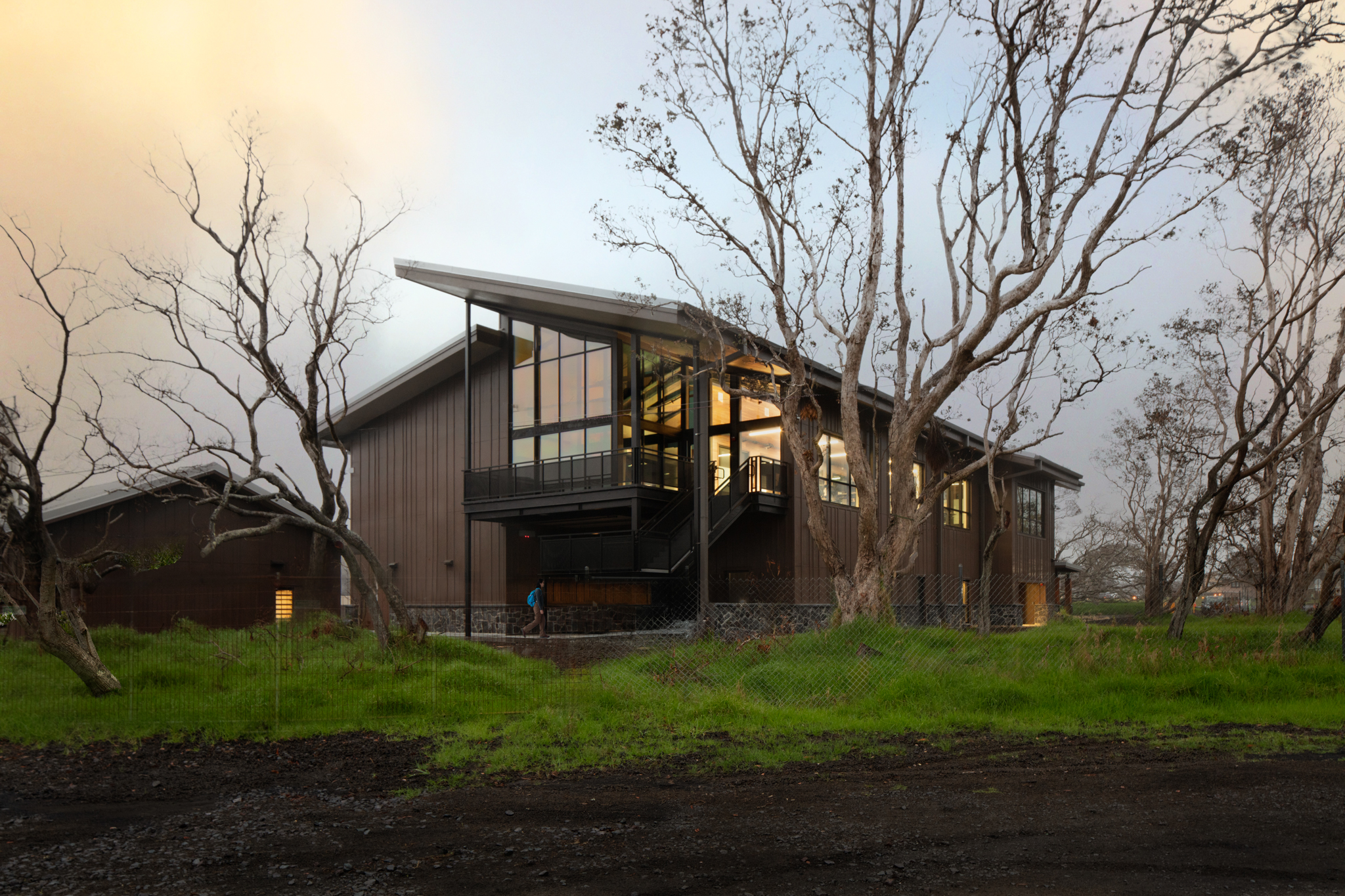
More than a replacement facility, the USGS HVO Field Station represents a renewed link between observation, education, and community safety. Through a design that supports modern science and honors the character of Kīlauea, the project reestablishes an essential presence at one of the world’s most active volcano’s and thoughtfully integrates how research, resilience, and stewardship can protect people and place.


